
We’re facing a genuine focus crisis. Teachers report that attention spans are shrinking. Homework battles are getting more intense. ADHD diagnoses are climbing.
Traditional methods of “training focus” often feel like punishment: sitting still, doing drills, or being lectured. But what if the best way to build concentration didn’t feel like work at all? What if it felt like play?
Piano lessons are one of the most effective, science-backed ways to build executive function and focus in children. And the best part? It works because it’s genuinely enjoyable.
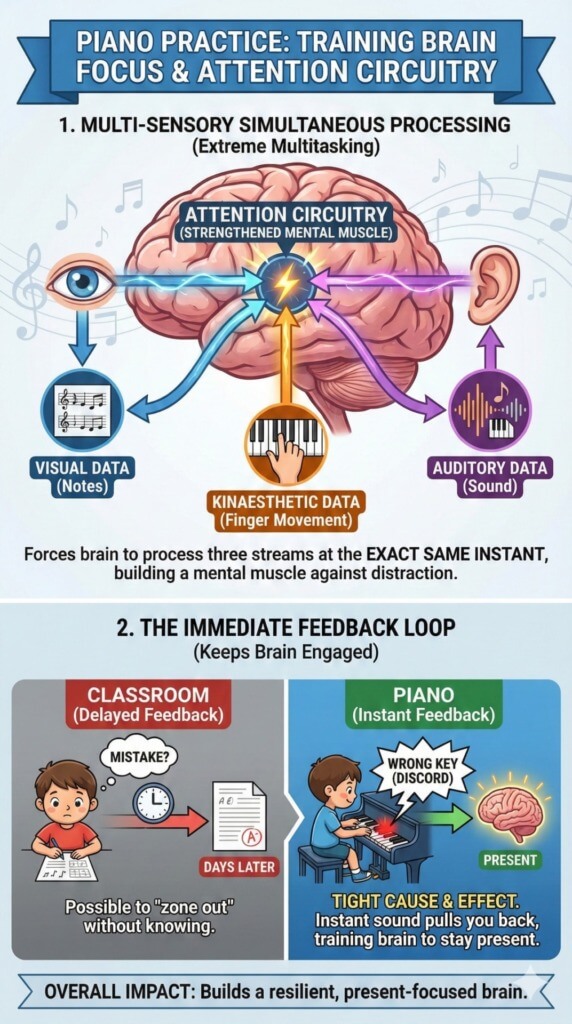
1. Multi-Sensory Simultaneous Processing
Focus isn’t just about staring at one thing; it’s about managing information. Piano pushes a child’s brain to process multiple streams of data at once.
To play a single measure of music, a child must process visual data (notes), auditory data (sound), and kinaesthetic data (finger movement) all at the exact same instant. This extreme multitasking forces the brain to strengthen its attention circuitry. It creates a kind of “mental muscle” against distraction.
2. The Immediate Feedback Loop
In a classroom, a child might not know they made a mistake on a worksheet until it’s graded days later. At the piano, feedback is instant.
If you hit the wrong key, you hear a discord immediately. This tight cause and effect loop keeps the brain engaged. It’s impossible to “zone out” while playing piano because the sound instantly pulls you back. This constant engagement trains the brain to stay present.
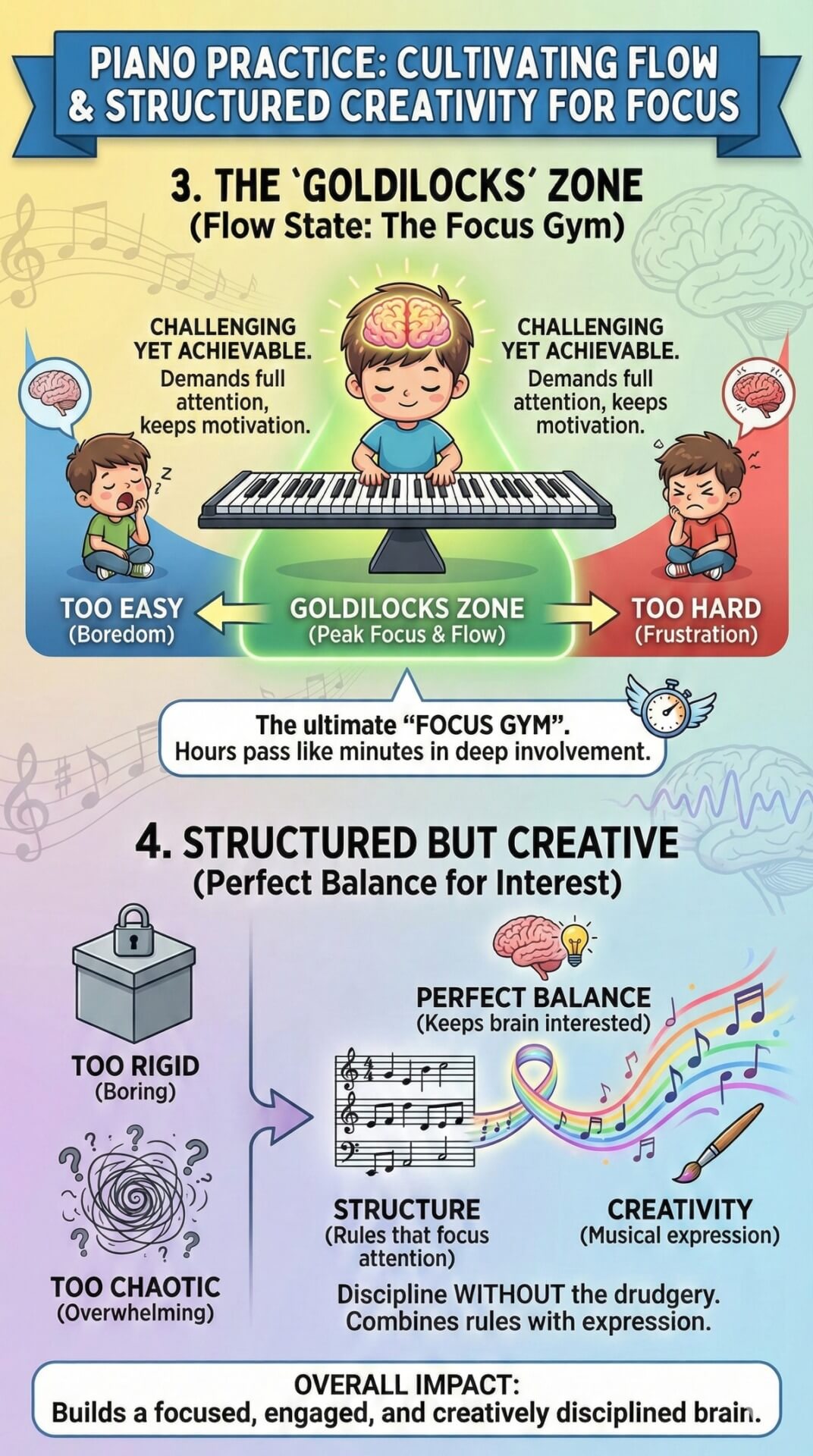
3. The “Goldilocks” Zone (Flow State)
Psychologist Mihaly Csikszentmihalyi defined “flow” as a state of peak focus that happens when a task is just hard enough to be challenging, but not so hard that it’s impossible.
Good piano instruction lives in this zone. A new song is a puzzle to be solved. Because it’s slightly difficult, it demands full attention. Because it’s achievable, it keeps the child motivated. This state of flow is the ultimate “focus gym” for a developing brain.
Research shows that when high challenges are matched with high skills so that learners feel stretched, the deep involvement of the flow state begins. Hours can pass in what feels like minutes when a musician is genuinely engaged.
4. Structured But Creative
Some children struggle with focus because tasks are too rigid (boring) or too chaotic (overwhelming). Piano strikes the perfect balance.
The sheet music provides structure, rules that focus attention. But the musical expression allows for creativity. This combination keeps the brain interested. It’s discipline without the drudgery.
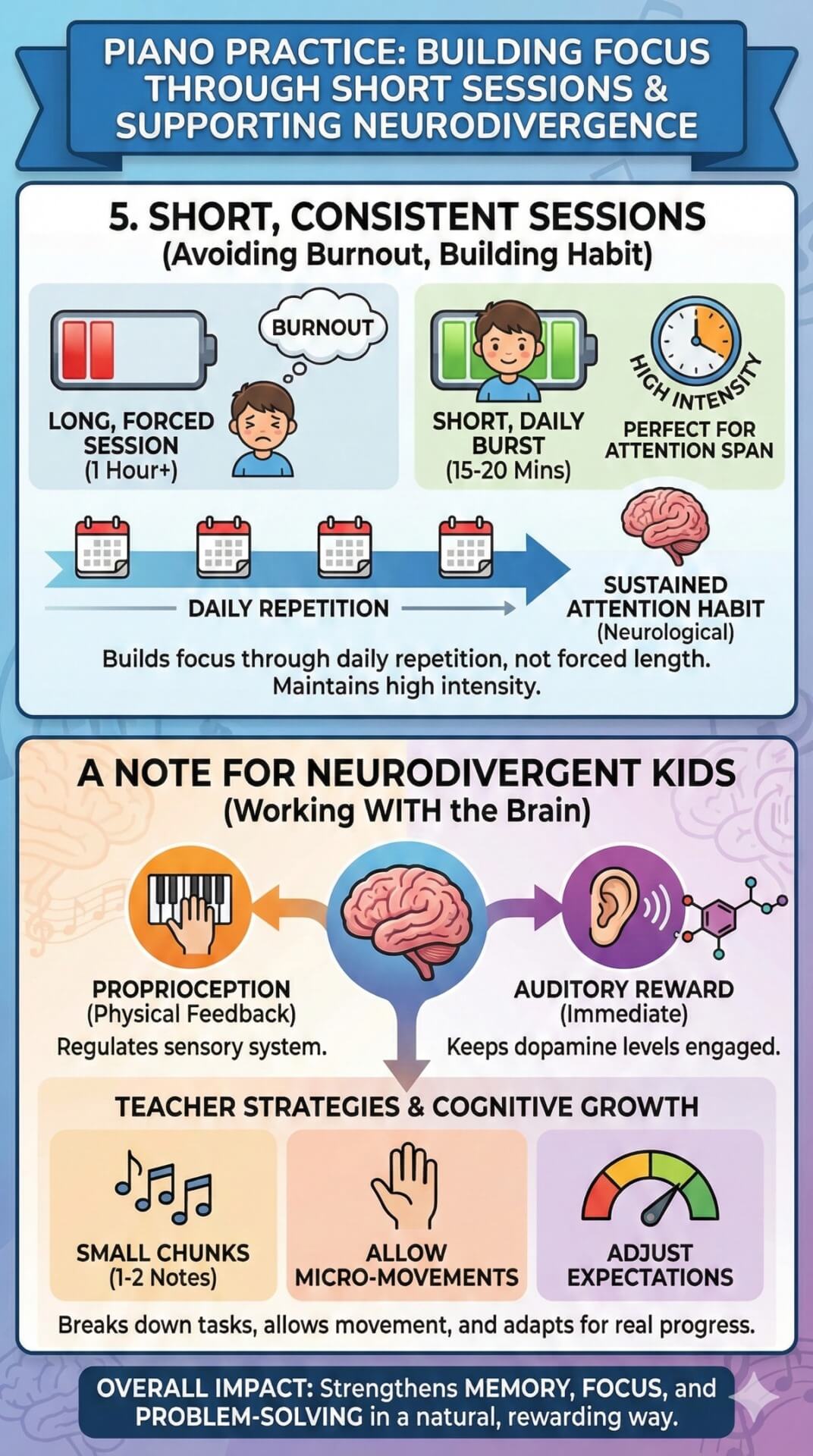
5. Short, Consistent Sessions
You can’t build focus by forcing a child to sit for an hour. That leads to burnout.
Piano practice works because it’s built on short bursts. A 15 to 20 minute daily session is perfect for a child’s attention span. It’s long enough to make progress, but short enough to maintain high intensity. Over time, this daily repetition builds the neurological habit of sustained attention.
A Note for Neurodivergent Kids
For children with ADHD, the piano can be particularly powerful. The physical feedback of the keys (proprioception) helps regulate their sensory system, while the immediate auditory reward keeps their dopamine levels engaged. It’s a focus tool that works with their brain, not against it.
Many music teachers working with neurodivergent students find that breaking practice into very small chunks (even just one or two notes at a time), allowing micro-movements, and adjusting expectations during difficult days creates real progress. Piano lessons support cognitive growth by strengthening memory, focus, and problem-solving in ways that feel natural and rewarding.
Build Focus Naturally
Stop fighting the focus battle with lectures and punishment. Give your child a tool that builds concentration through the genuine joy of music.
Start building your child’s focus and concentration naturally through piano. Explore classes at Little Play Space and discover how music can transform scattered attention into sustained engagement.