Standard solutions like “public speaking workshops” often make this worse. Standing a shy child on a stage and telling them to “speak louder” is like forcing a car into high gear before the engine is warm. It causes anxiety, not growth.
Creative Drama offers a different mechanic. We do not demand confidence; we build it, brick by brick, using the science of play and role-play. Here is how it works.
1. The “Mask” Mechanism
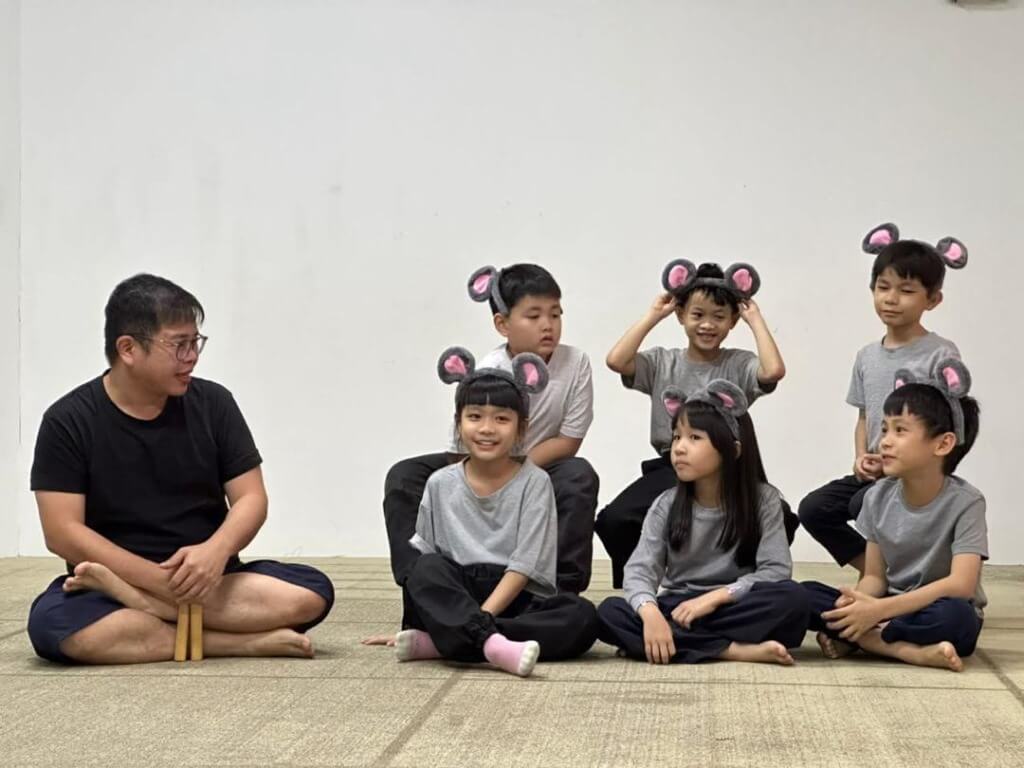
Shyness often stems from self-consciousness. A child is afraid of being judged as themselves. Creative Drama bypasses this defence mechanism by offering a “mask.”
When we ask a child to play a “Grumpy Giant” or a “Happy Alien,” they are no longer being themselves. They are playing a role. This psychological distance is critical. It allows them to experiment with being loud, big, and expressive without the fear of personal judgement. Once they realise they can be loud as a Giant, it becomes much easier to be loud as themselves.
2. Public Speaking Without the Podium
Most public speaking for kids in Penang focuses on speeches and podiums. That is a high-pressure environment.
We teach speaking through dialogue. In a drama scene, you speak because you need to tell your partner something, not because you are being graded. This shifts the focus from “performance” to “communication.” The child learns to project their voice naturally to be heard by their teammate. It turns public speaking into a functional skill rather than a terrifying test.
This is why our Creative Drama Class in Penang focuses on dialogue rather than rigid speeches.
3. The Social Feedback Loop
Confidence is largely social. It is about knowing how to read a room. Social skills activities for kids often fail because they are too abstract. Drama makes them concrete.
You cannot act alone. You must watch your partner’s eyes, listen to their tone, and respond to their body language. If you do not listen, the scene fails. This forces the brain to engage with others constantly. It builds the neurological pathways for eye contact and active listening, which are the foundations of social confidence.
Social interaction is critical for development. Learn more about how drama boosts empathy and communication skills in kids aged 4-12.
4. Resilience Through Improvisation

In school, a mistake is marked with a red pen. In Creative Drama, a mistake is just a new plot point.
We use improvisation games where there is no script. If a child stumbles or says a “wrong” word, the game continues. They learn to recover instantly. This builds resilience. They learn that making a mistake does not mean the world ends. This “bounce-back” ability is the true definition of confidence.
5. Emotional Regulation and Control
A shy child is often an overwhelmed child. They feel big emotions but suppress them.
Drama provides a safe outlet to let those emotions out. We teach them how to control their breath and their body posture. We teach them that standing tall changes how they feel inside. By mastering their physical state, they learn to master their emotional state.
A Note for Introverts
It is important to distinguish between shyness (fear of social judgment) and introversion (needing time alone to recharge). Drama is not about turning introverts into extroverts.
For introverted children, drama is a powerful tool. It gives them a structured way to channel their rich inner world. Many of the world’s best actors are introverts. They use the stage to express what they keep inside. Our class gives them the permission to unleash that energy in a controlled, creative way.
Build Confidence the Fun Way
Stop waiting for your child to “grow out of it.” Give them a safe space to practice being brave.
Start building your child’s confidence naturally through drama. Explore classes at Little Play Space and watch them transform from shy to shine.