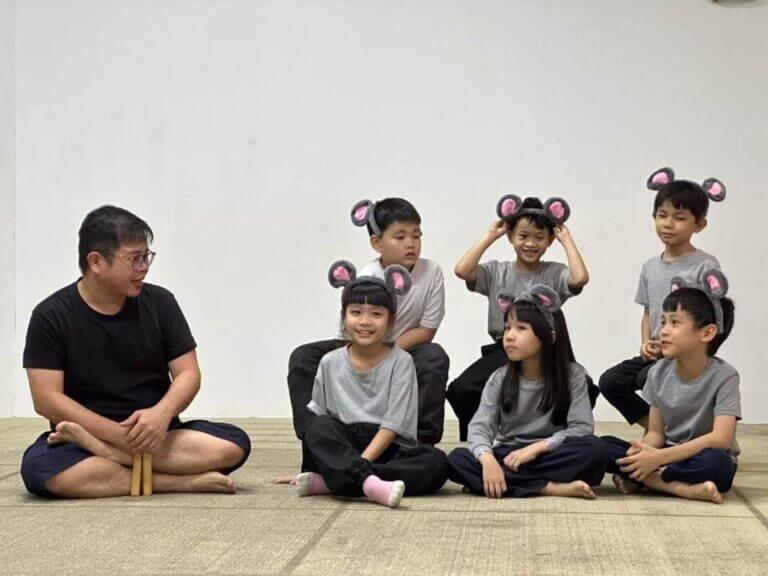
We are facing a confidence crisis in schools. Teachers report that while children are academically smart, many struggle to speak up in class. They are afraid of being “wrong.” Emotional outbursts are common because children lack the tools to express frustration verbally.
If you are a parent of a primary schooler in Penang, your child’s schedule is likely packed. Between school, homework, and tuition, their brain is constantly in “input mode.” They are absorbing facts, rules, and logic all day long.
But when do they get to practice “output mode”?
Why Choose Creative Drama Over Standard Tuition?
This is the gap that a speech and drama class in Penang fills. While tuition teaches your child what to think, Creative Drama teaches them how to express what they feel. Creative Drama is one of the most effective, science-backed ways to build emotional intelligence (EQ) and stage presence in children. And the best part? It works because it is genuinely enjoyable.
In a high-pressure academic environment, children often lose their voice. They become afraid to speak up because they fear being “wrong.” In our drama class, there is no wrong answer. There is only expression. This psychological shift is critical for building the self-esteem they need to survive and thrive in primary school.
What Happens in a Creative Drama Class?
We are not just playing games. We are building emotional intelligence. Here is the mechanic of how our creative drama class works.
1. Emotional Processing Through Role-Play

Confidence isn’t just about speaking loud; it is about managing what you feel inside. Creative Drama pushes a child’s brain to process complex emotions in a safe simulation.
To play a character who is “angry” or “joyful,” a child must identify that emotion, internalise it, and then express it outwardly using their voice and body. This process forces the brain to strengthen its emotional circuitry. It creates a “mental muscle” for articulating feelings, reducing tantrums and building self-awareness.
2. The Improvisation Loop
In a standard tuition class, there is only one right answer. In Creative Drama, there are infinite right answers.
We use improvisation (acting without a script). If a scene changes unexpectedly, the child must adapt instantly. This tight stimulus-response loop keeps the brain engaged. It is impossible to “zone out” because the scene depends on their contribution. This constant engagement trains the brain to think on its feet, a critical skill for real-world confidence.
3. The “Safe Space” Zone

Psychologists know that fear of failure is the biggest killer of confidence. Standard school environments often punish mistakes.
Good drama instruction creates a Safe Space. A mistake in a scene is not a failure; it is a “plot twist.” Because the stakes are low but the engagement is high, children feel safe to take risks. They learn that stumbling over a word does not mean the world ends. This psychological safety is the ultimate “confidence gym” for a developing mind.
Social interaction is critical for development. Learn more about how drama boosts empathy and communication skills in kids aged 4-12.
4. Structured But Creative
Some children struggle with confidence because they feel constricted by rigid rules. Others struggle because they lack structure. Creative Drama strikes the perfect balance.
The scenario provides structure (the rules of the game). But the expression allows for creativity (how they play the game). This combination keeps the brain interested. It is discipline without the drudgery of rote memorisation.
5. Short, Interactive Projects
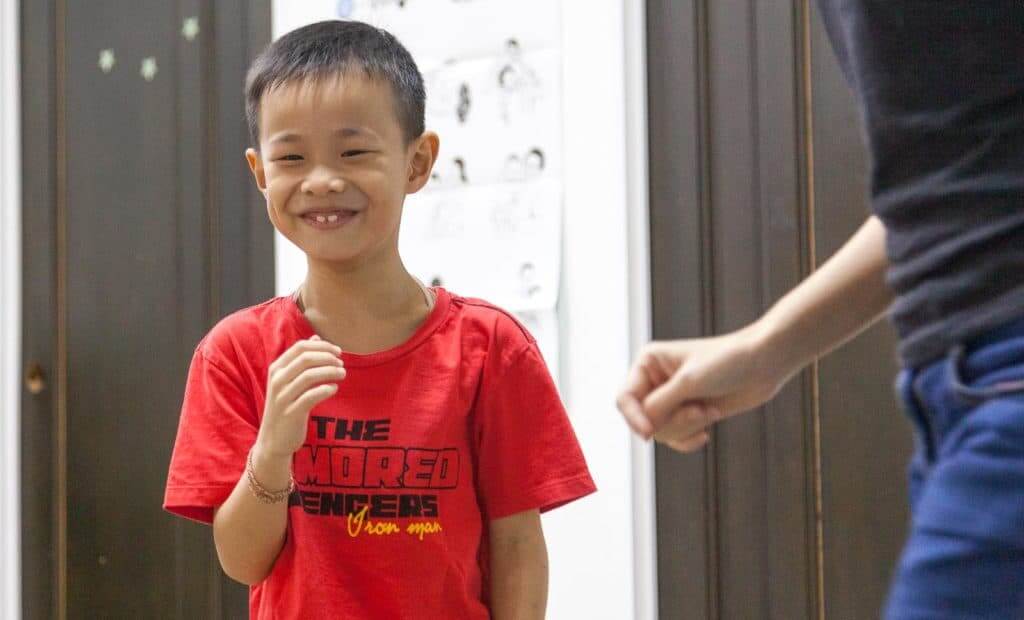
You cannot build stage presence by forcing a child to memorise a 10-page script on day one. That leads to anxiety.
Our Creative Drama practice works because it is built on short, interactive projects. A quick 5-minute skit or a targeted role-play game fits a child’s attention span perfectly. It is long enough to make progress, but short enough to maintain high energy. Over time, this repetition builds the neurological habit of speaking up without hesitation.
The Difference Between “Creative” and “Speech” Drama
Parents often ask us about the difference. Here is the breakdown.
- Standard Speech and Drama: Often focuses on memorising scripts and passing exams (like Trinity or LAMDA). It is about “getting it right.”
- Our Creative Drama: Focuses on Improvisation.
We prioritise the process over the product. We do not just want your child to recite lines like a robot. We want them to think on their feet. We give them a scenario and ask, “What happens next?”
This builds a type of confidence that exams cannot measure. It teaches adaptability. In the real world, there is no script. Creative Drama prepares your child for that reality.
FAQs
A Note for the “Quiet” Kid
For children who are naturally shy or introverted, drama can be particularly powerful. It offers a “mask.”
A shy child might be terrified to speak as themselves. But if you ask them to speak as a “Lion” or a “King,” they borrow the confidence of that character. The physical feedback of standing tall and projecting their voice helps regulate their nervous system. It is a confidence tool that works with their personality, not against it.
Many parents find that after just a few months, the “character’s confidence” starts to become the child’s own confidence.
Build Confidence Naturally
Stop fighting the confidence battle with pressure and forced presentations. Give your child a tool that builds self-esteem through the genuine joy of expression.
Start building your child’s confidence and expression naturally through drama. Explore classes at Little Play Space and discover how theatre games can transform a shy whisper into a confident voice.